
Before going deeper into the Encumbrance Certificate meaning; Let start with an adage: “Think before you leap”. The simple meaning is to think carefully when you are buying a flat or a house.
Because it involves your savings, your future, and your peace of mind, understanding the meaning of the Encumbrance Certificate is crucial to avoid any legal risk.
An Encumbrance Certificate guide you whether a property carries any legal or financial liability. It gives transparency and protects you from hidden risks.
If you are thinking of buying property, you must clearly understand the Encumbrance Certificate’s meaning before signing any agreement.
Key Takeaways
- An Encumbrance Certificate refers to a legal document where the buyer to know whether a property has any financial or legal liabilities.
- It is registered by the Sub-Registrar’s Office.
- It gives clear ownership and protects buyers from fraud.
- If the buyer applies for a loan, banks require an EC before approving a home loan.
- There are two types: Form 15 (with liabilities) and Form 16 (Nil Encumbrance).
- You can apply online through your state’s land registration portal.
- Always verify at least 10–15 years of property records before buying.
- Small verification today can prevent major legal issues tomorrow.
What is an Encumbrance Certificate (EC)?
Many people ask, What is an Encumbrance Certificate, and why do banks insist on it? In simple word the Encumbrance Certificate’s meaning is that a document issued by the government that shows that the property has any pending loans, mortgages, or legal claims during a specific period.
These certificates are issued in the local Sub-Registrar’s Office. The Encumbrance Certificate holds all information on transactions related to that property, such as:-
- Sale
- Gift
- Mortgage
- Lease.
If the flat or property has no liabilities, the certificate shows a “Nil Encumbrance.” If there is any record of registered transactions, they appear in the document.
Understanding the Encumbrance Certificate meaning is essential for you to know that the property which you are planning to buy is safe and the title is clear.
Why is an Encumbrance Certificate Important?

The Importance of an encumbrance certificate in property purchase cannot be sidelined. As it protects the buyers from future disputes
Here’s why it matters:
- It confirms clear ownership.
- It shows if any bank loan exists on the property.
- Banks require it before approving a home loan.
- It prevents fraud and double-selling.
- It builds buyer confidence.
When you get a clear idea about the Encumbrance Certificate’s meaning, then you can know how it acts as legal proof of a clean property record.
Many property disputes occur as the buyer skips this verification. Knowing the Encumbrance Certificate meaning saves you from such costly mistakes.
Types of Encumbrance Certificate
There are mainly two types of EC:
1. Form 15
This form shows that the property has mortgage, sale, lease, or gift deeds during the selected period. That means the property exists with registered transactions or liabilities.
2. Form 16
This form highlights that the property has no mortgage, sale, lease, or gift deeds for a certain period of time. It means the property is free from any registered financial or legal liability.
When you study the Encumbrance Certificate meaning & know about these two types of EC, then you will be more confident to fill the form 16.
Documents Required for Encumbrance Certificate
Before applying, you must know what documents are required for the Encumbrance Certificate.
You generally need:
- Property details (Survey number, address)
- Copy of Sale Deed
- Registration details
- Identity proof of the applicant
- Application form with required fees
Always remember that accurate information helps to make your work smoother. Only due to incorrect property details, the application gets delayed.
How to Apply for an Encumbrance Certificate Online
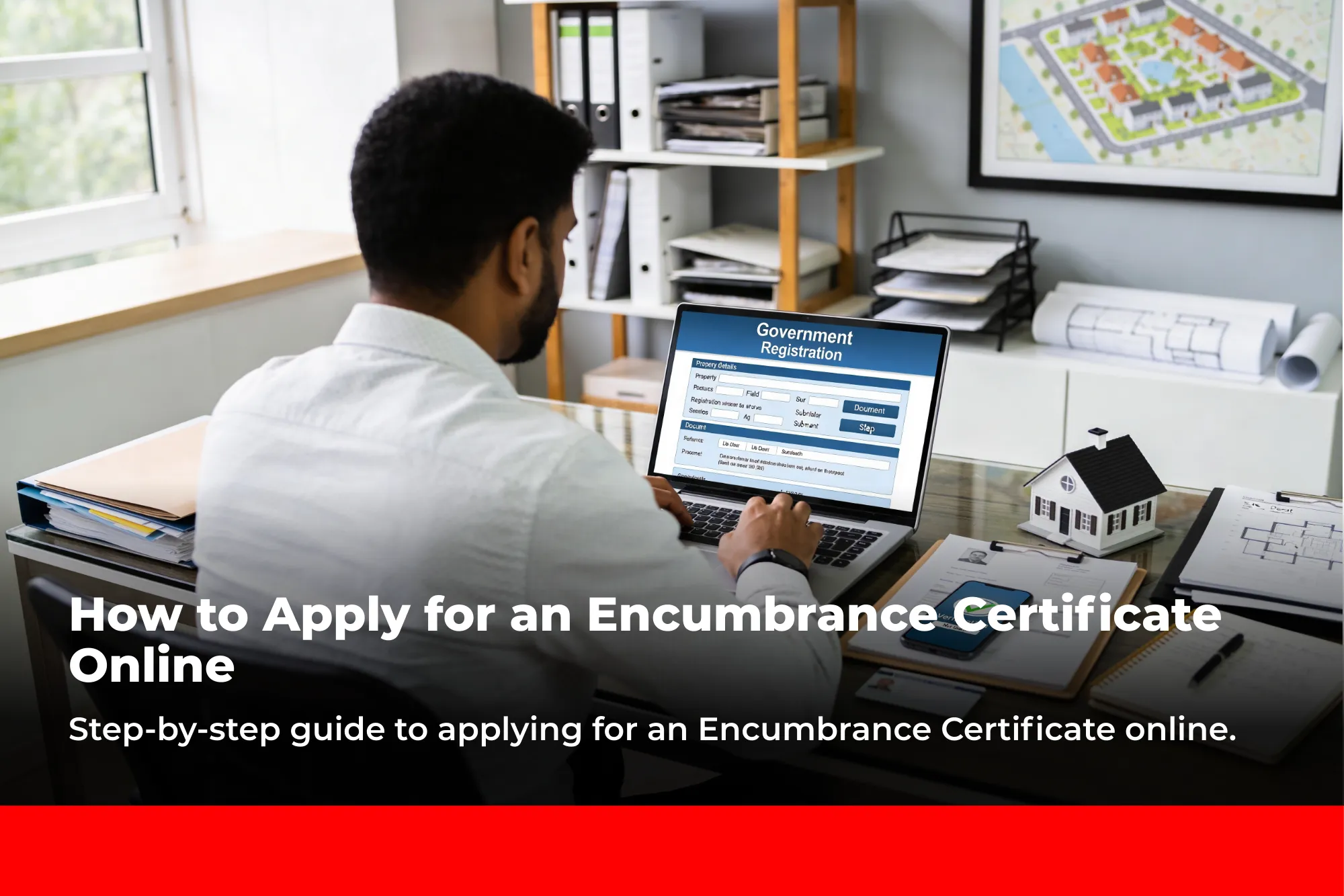
The buyers can apply online. Check here for how to apply for an Encumbrance Certificate online.
Here are the general steps:
- Go through your state’s land records or registration website.
- The buyer can choose the Encumbrance Certificate option.
- Enter property details like district, survey number, and period.
- Fill in applicant information.
- Pay the required fee online.
- Submit the application.
- Download the certificate after approval.
The online process helps the buyer to save time and reduce paperwork.
How to Check Encumbrance Certificate Status
The buyer who applied online can track their status online using their application number. If the buyer applies offline, then they can visit the Sub-Registrar Office and check manually.
Knowing the Encumbrance Certificate’s meaning can help buyers to review the document carefully once they receive it. Always look into those things:
- Owner name
- Property details
- Period selected
- Transaction records
Check the details minutely to avoid errors; minor spelling errors can create legal complications later.
Charges and Processing Time
Government fee structure might vary from state to state. Normally, the fee structure varies depending on the verification, as per the number of years.
Here are the details:-
- Processing time generally takes between 2 and 7 working days.
- In some areas, it might take longer periods.
When you understand the Encumbrance Certificate’s meaning, you can gather information on how this small fee offers strong legal security for your investment.
Common Mistakes to Avoid While Applying
Here are some common mistakes the buyer usually makes:
- Selecting the wrong survey number
- Choosing a short verification period
- Entering an incorrect owner name
- Ignoring transaction details
Property history must be checked for at least 10 to 15 years before buying.
Final Thoughts
Buying property without verifying the EC can be risky. Always keep in mind the legal; clarity can protect your investment and your future. The Encumbrance Certificate not only goes beyond a simple document, but also serves as a getaway for your future investment. It confirms ownership, checks liabilities, and ensures a safe transaction.
Before making a mind to buy a property and handing over the money to the broker or builder, understand the Encumbrance Certificate meaning clearly. Go through the documents, review records carefully, and never rush the process.
A small step today can save you from major legal trouble tomorrow. Always make informed property decisions.
If you are looking for legally verified and transparent property deals, buy your dream home with Sri Jagannath Promoters and Builders today !
Frequently Asked Questions (FAQs)
- What is the Application of the Encumbrance Certificate?
It is used to know whether a property has legal or financial liabilities during a specific period.
- Can I know the tenure period of EC before buying a property?
At least 10–15 years of records for better safety.
- Is an Encumbrance Certificate compulsory for home loans?
Yes. Most banks require an EC before approving a housing loan.
- Can I get an Encumbrance Certificate for old property?
Yes. You can request records for older periods, depending on data availability.
- What does Nil Encumbrance mean?
It means no registered financial or legal liabilities exist on the property for the selected period.








Leave a Reply